Market Decision Intelligence · B2C and B2B
Think further.Decide better.You stay in charge.
Thinkers are synthetic intelligence built to augment the market decisions (pricing, positioning, messaging, audience, brand, expansion) you make every day. They challenge your options, remember what your organization has learned and simulate each alternative on a market built on a scientific foundation, before you spend.
No personal data in the population genome · published science
Which decisions
When the answer depends on the market.
Launching, pricing, positioning, choosing audience and message, caring for the brand, expanding, responding to a crisis, simulating possible futures.
We come first: studies with real people remain essential, become better aimed and can feed the whole system.

And when you want to see the real world?
Meet PopMe, the venture in our ecosystem that shows how people really live the experiences with your brand.
PopMe for Business ↗Use cases
What you can decide with Horizon.
Campaign A or campaign B?
Before you publish on social media, see which piece deserves more investment, for whom and why.
Would this concept land?
Test a new product, a new edition or a new concept and see which customer types respond and which resist.
Which position, and for whom?
Compare positions and see which customer types respond, which do not and what they would doubt.
Do my studies bring all the signals?
Assess your brand tracker and internal studies: what they already answer, what is missing and which other market signals are worth capturing.
What is the market telling me?
Klima looks for current public signals on what people say, competitors and prices, with the source of each piece of information.
How would the committee react?
In B2B, take your offer to the buying room and see where the deal moves and where it stalls, role by role.
Where do we expand next?
Compare candidate physical locations on the same criteria and get them ranked, with a recommendation for each.
A video of a defect went viral. What do we do?
Facts with sources, past crises and how customers would react to each response, so you can make the call.
Simulation results show order and direction, not exact percentages. You decide.
Proof · the BVE study
Measured against real people, and clear about where it is weak.
Our Behavioral Validation Experiments (BVE) compare synthetic answers with human answers to the same questions, across language models and conditions. Correlations are synthetic versus human.
Personality alone, in stage 1 of the study: decisions and affinities tied to personality traits.
Operational behaviors, against 0.318 for identity attributes under the same condition: language models reproduce who people are better than what they do day to day.
Three ways to use it
From a business question to the most sophisticated decisions.
From a question
For founders and teams without a simulation specialist.Write your business question in one sentence. The system builds the market, runs the simulation and delivers a one-page report.
With your team in control
For insights, marketing and product teams.Specialist mode to choose dimensions and Identity Models. On Horizon Plus: your own data, market versions over time, future scenarios and Decision Systems.
With specialists
For more sophisticated decisions that call for consulting.Advanced markets and simulations, designed and run with our network of specialists, coordinated by Wortya, our partner.
Meet Wortya ↗B2B
Selling to companies? Your Thinkers know who signs.
In B2B nobody buys alone. Your Thinkers model the buying room — the people who use, pay, approve and can block — so you test your offer with the committee that will decide, not with a single buyer.
Buying rooms
The roles of the buying committee, by seniority, sector and company size.
The decision, simulated
See where the deal moves and where it stalls: who champions it, who objects, what the approver asks for. Ward challenges your offer from the buyer’s side.
From committee to signature
See what each role needs in order to move toward signature, with each country’s procurement and compliance practices.
Decide before you execute
Thinkers help you decide what is worth doing.
Thousands of products now offer agents, bots and automations that execute. More bots means more fronts, more output to check and more decisions waiting on one person. Thinkers come in before that: they help you decide what is worth doing at all.
Execute tasks
- Research, write, schedule, invoice
- One bot per line of work
- Each with its own output to check
- More bots, more fronts for one person
Think with you, before you decide
- The market, the customer and the specialist on one question
- One memory: every decision teaches the next
- Nothing is kept without your confirmation
- You decide, under a written constitution
The more bots you run, the more you need one place to decide — and to remember why.
Four levels of resolution
Zoom from a country down to a tribe.
Identity Models — the customer types of a market — exist at four levels. Go only as deep as your decision needs: the same young urban explorer looks different across the country, on the West Coast, in a cultural community, and among the fans who organize their weekends around a passion.
Your team
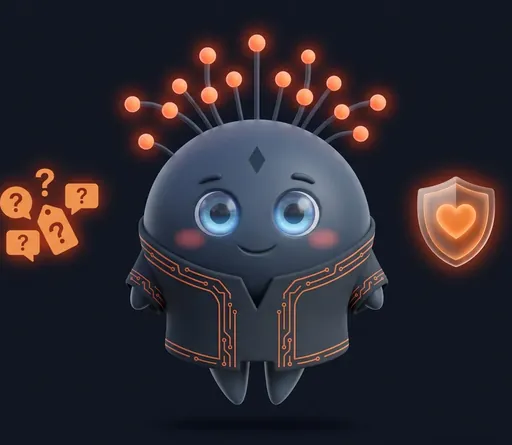
Thinkers think with you. You decide.
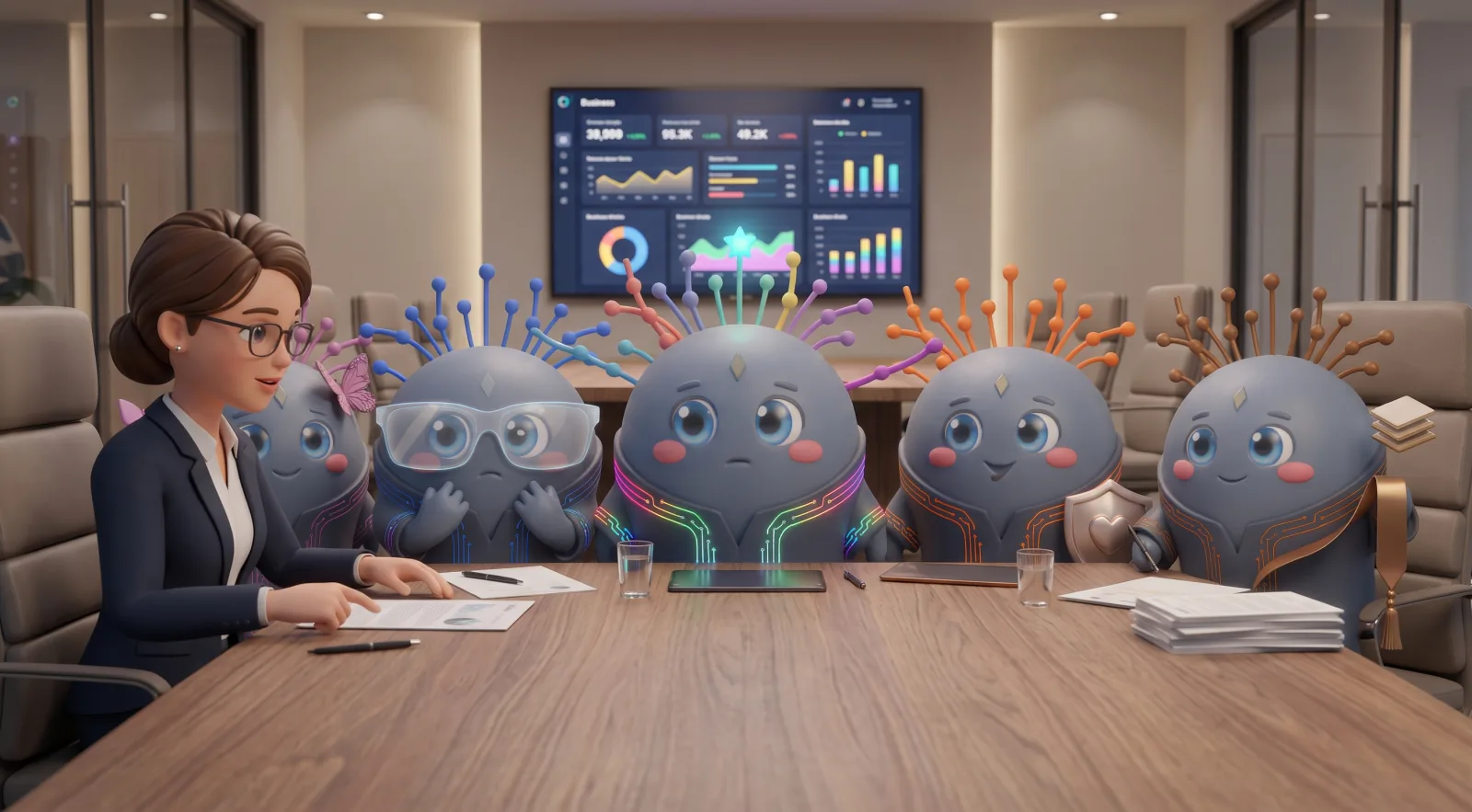
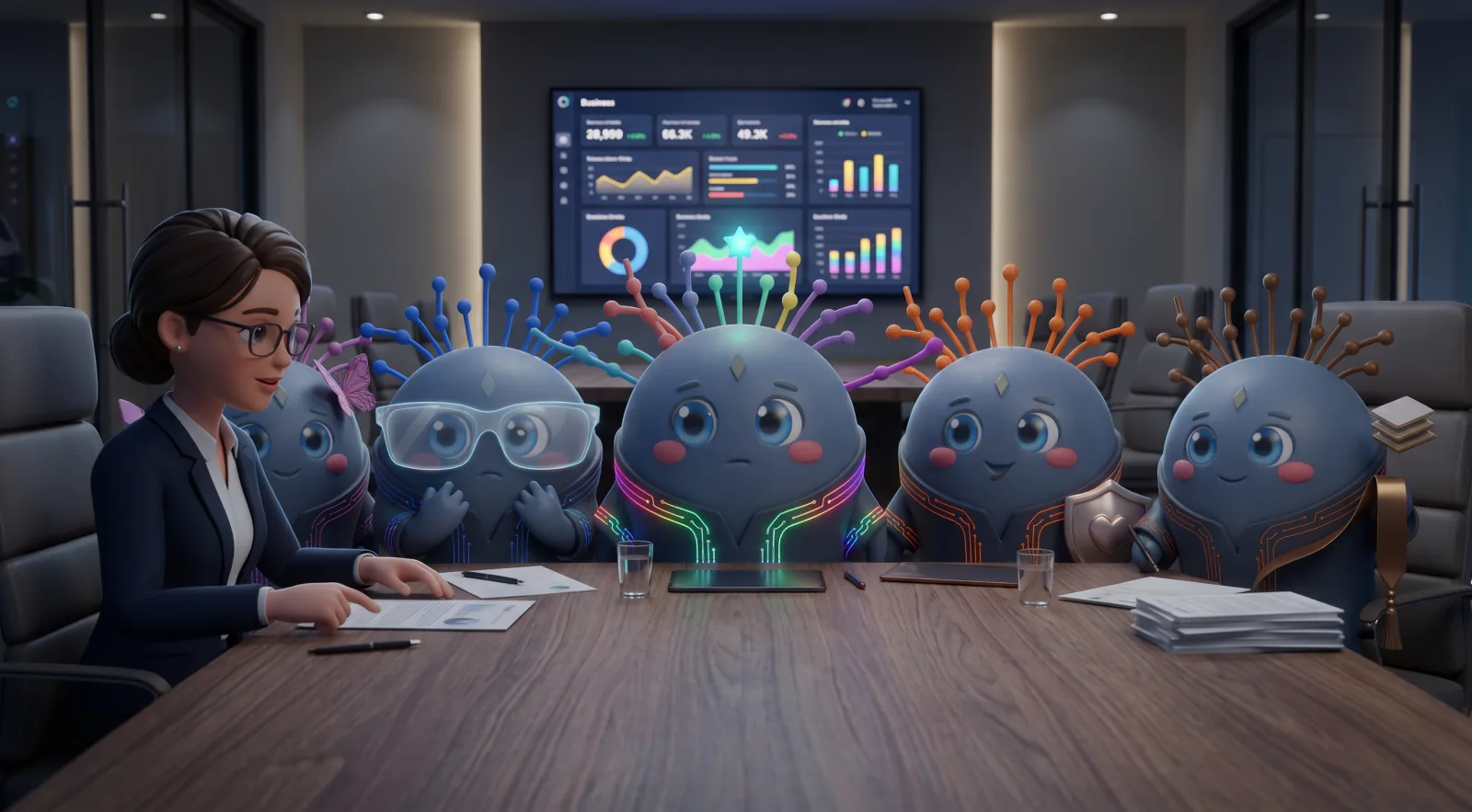
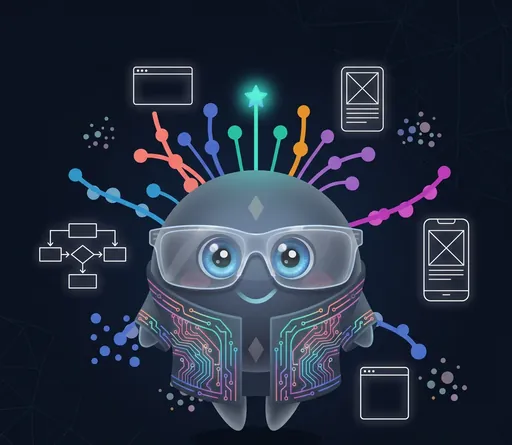
You bring the question and make the call. Nodi facilitates; Klima brings the market, Ward the customer. Kora and Alma join on Horizon Plus.
- Alma
- Klima
- Nodi
- Ward
- Kora
Thinkers at work
One question. Three Thinkers. One person deciding.
“Should we launch the new oat drink at $3.49 or at $3.99?”
Do we sell the annual plan to mid-size companies at US$ 12k or US$ 18k?
Nodi brings what your organization has learned from similar deals.
Buying room brings together who uses, who pays, who approves and who can block.
Ward raises what the committee would doubt at each price.
What a Thinker does
Six things your Thinkers do with you.
Argues with you
Challenges your alternatives, brings the counter-argument and says what you are not seeing.
Remembers
Brings back past decisions and what came of them, so you never start from zero.
Brings what matters
Surfaces what your organization already knows about the question, including the documents nobody used.
Defines the market
Builds the synthetic population for your question from the SPM, with your customer types (Identity Models).
Runs the simulation
Tests your alternatives on that population before you spend on the real market.
Speaks for the buyer
Says what the customer would doubt, refuse and never pay for.
Every account starts with the structure of a SuperMind: you, your Thinkers and your organization’s knowledge. A person always decides.
It is not a chatbot: it is a decision system, where people think better with Thinkers beside them.
Meet your team
Your Horizon team: you and three Thinkers, ready on day one.
Every Horizon licence comes with three Thinkers and the Council to contest your decisions. Each Thinker brings a different way of thinking to your decision; none of them takes it from you.

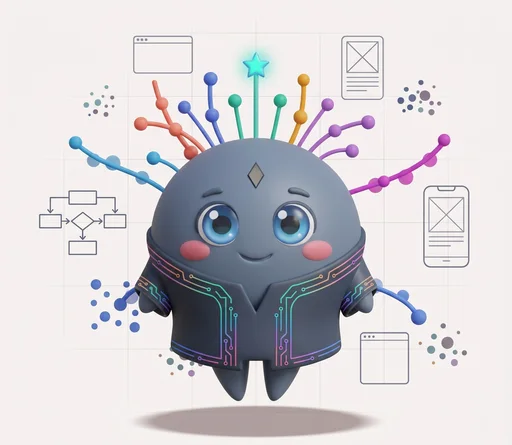
Nodi
Runs the decision with you: frames the question, brings what your organization already knows and shows you what needs you.

Klima
Defines the market for your question and builds the synthetic population from the SPM. Then runs the test.

Ward
Speaks for the buyer: what they would doubt, object to and never pay for.
Grows with your plan
Board of specialists
Finance, marketing, operations, strategy, technology & product, people & culture: specialists who read your market decision through their discipline.
Council
Five Thinkers in a structured deliberation, with an argument map. Or Contest: two Thinkers, on different AI models, against your position.
More than one AI model
You are not tied to a single model.
Different models have different biases. So when your decision is contested, the challenge comes from other providers: the Council deliberates with Anthropic, OpenAI and Google, and Contest brings arguments from OpenAI and Google. The other Thinkers run on Anthropic today.
On Enterprise, your organization can also use its own AI keys.
The loop
Every decision makes the next one better.
Horizon runs as a continuous loop. You can enter it at any point with a New question: one sentence, the business question you need answered. The decision comes later.


- New questionStarts the loop, or re-enters it, at any moment.
- 01 SimulateKlima tests each alternative on a synthetic population of the right market; Ward challenges it from the buyer’s side.
- 02 AnalyzeWhat wins, with whom and why, with its evidence and its limits.
- 03 LearnWhat you learn stays in your organization’s memory, at the right level, approved by people.
- 04 DecideYou record your bet, read the one-page report and decide. When reality arrives, it goes back to Learn.
How it works
Five stages of thinking, then you decide.
Behind every New question, Horizon follows the five stages of design thinking (Stanford d.school), with a Thinker at your side in each one.
- 01Define
The question, the audience and what success looks like, framed with you.
- 02Discover
Dig deeper before going on: what the organization already knows, in its memory and documents, and what is still worth searching for outside. Nodi brings both.
- 03Ideate
The alternatives: yours, your team’s and the ones the Thinkers suggest.
- 04Prototype
Each alternative written so it can be tested: a concept, a price, a message.
- 05Test
The simulation on the synthetic population, with its credit cost approved first.
Decide
A one-page decision report: your bet, the simulation and, later, reality, side by side. You decide.
Learn
The decision and its result become memory that makes the next question better.
Grounded, not invented
Built on science and layered data, not on anyone’s personal data.
Population Genome
The recipe of each country.
Synthetic Population Engine
Builds the market for your question.
IEI
Learns which information matters in each decision.
The science · Coverage, not N
Why a few thousand synthetic identities can represent a country.
Studies with people need large samples because what drives each person is invisible. In a synthetic population it is explicit, so the job changes from estimating to covering: every identity that exists in the market, each with its weight.
Demographics alone do not reproduce how people answer (synthetic vs human, mean correlation −0.03).
Personality does, on questions tied to personality traits (stage 1 of the BVE study). Fidelity drops sharply for operational behaviors, which is why results are read as order and direction, not percentages.
of the variance comes from how the question is designed. The choice of AI model explains 3.2%.
Pricing
Start free. Pay for what you decide.
After Horizon
Take this way of deciding to the rest of the organization.
Horizon is the entry door to INO-OS, the operating system of intelligence-native organizations. Once market decisions run here, the next stage is to bring other areas into the same system.
From our ecosystem
PopMe
Shows how people really live the experiences with your brand, with verified human presence.
PopMe for Business ↗Wortya
Wortya, a Thinkers.pro partner, brings specialists who run decision projects with your team.
Meet Wortya ↗Your next market decision deserves a better argument.
Bring one question. Your Thinkers bring the evidence, the counter-arguments and the test. You bring the judgment.